

What do we do when it becomes difficult to find purpose in what we do, make, or work on? Besides just putting one foot in front of the other?
I mean things such as writing a book, making a song, working a job, building a corporation (whether for-profit or nonprofit), building a piece of furniture, cooking a meal, taking care of our family, and other things. Things that take “effort” and are “work,” whether or not they are part of a business.
It is easy to feel like what we can do matters less and less (or not at all) amid the politics, technology, climate change, war, and general uncertainty of our time. Sometimes our own minds make it harder to see our purpose or impact, too.
The purpose of this post is not to depress you.
This post is to give you strength.
Please read on.
She Figured it Out; We Just Need to Read
I had not heard about the work of the author Riane Eisler [1] until recently.
I can summarize the major point I took away from her lifetime of research, in my own words:
We humans are smart enough to build our world based on partnership over domination. [2]
Yes, partnership. Welcome to 2026, where networks are not just about harvesting your personal data, and social capital is not just about monetary capital.
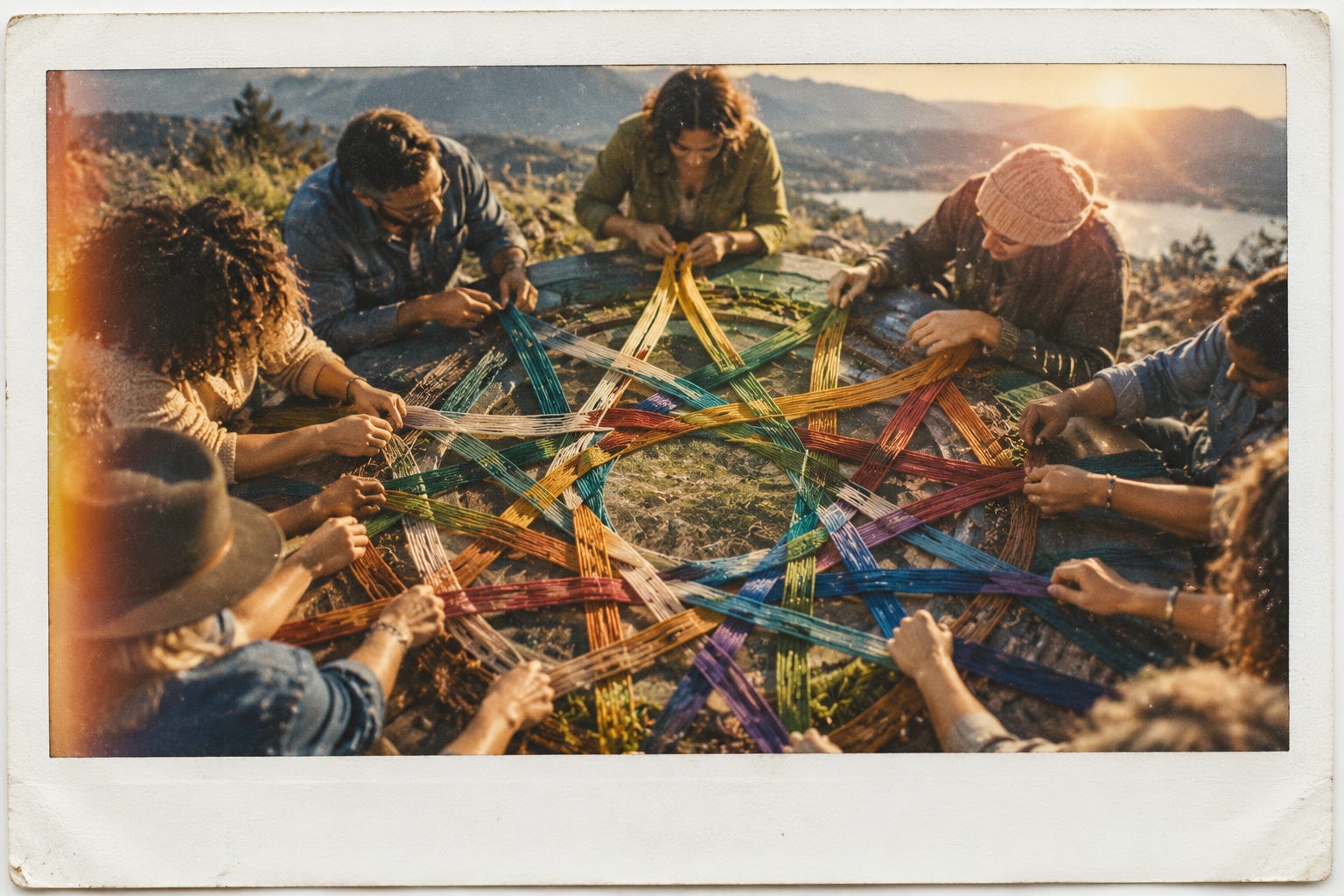
We can be kind to each other. We can care about each other. We can perform work & service with and for each other, not just as corporations, but as individuals.
Competition can be reframed in the spirit of “good sportsmanship”, on a foundation of partnership rather than domination over each other. [3]. Competition does not just need to be a race to the bottom.
When we say partnership here, we don’t mean [just] the corporate kind.
We mean the human kind.
Look, we are lucky enough as creatures that we were given big brains 🧠 and we can have these thoughts. We can do more than just have these thoughts, we can put these thoughts into action. We have the power. I believe in us.
And, in the spirit of pragmatism [4] (the way William James described it), a “good enough” theory can be good enough to take action, and we can learn from what follows.
Partnership is good enough work for me: people caring for each other, kindness, relationships, and the sense that we are all just a group of humans living together, trying to survive, and able to help each other.
Maybe caring for ourselves and each other is purpose enough.
Making a billion dollars seems like the hardest thing in the world to some. For others, it is getting out of bed. I would argue that one of the hardest and yet most worthy “wicked problems” [5] is trying to move on from the familiar system of domination and rebuilding the world in a spirit of partnership first.
Thanks to Ms. Eisler, there is good news: she has already laid so much of the groundwork for us, and the Center for Partnership Systems [6] offers ways to put it into practice. We just need to read it, realize it’s good enough theory, and start taking action.
More good news - there are already a lot of really good people out there who understand this and are working in this direction.
We can find a way. We can start where we are, help where we can, and keep trying together.
Postscript
This is a little something I have been wanting to say but only just now found the words to write it down.
You should see this as a continued foreshadowing of what I am working on. I hope to be able and ready to share more soon.
I believe completely that healthy partnership is at the core of a better future for all.
Does partnership move the needle at all for you, personally? If so, why? If not, why not? I am open to being proven right or wrong.
References
[1] Wikipedia. Riane Eisler.
[2] Center for Partnership Systems. Partnership Systems & Partnerism.
[3] Riane Eisler. Partnership and Domination Societies, Encyclopedia of Violence, Peace & Conflict, 3rd edition, 2021. See “Common Misconceptions,” page 3, for the discussion of competition.
[4] William James (1907). Pragmatism: A New Name for Some Old Ways of Thinking, Lecture II, “What Pragmatism Means.” See also the Stanford Encyclopedia of Philosophy: Pragmatism.
[5] Wikipedia. Wicked problem.
[6] Center for Partnership Systems. Resources for applying partnership principles in everyday life, communities, and organizations.